Global Travel Etiquette: Tips for Every Destination
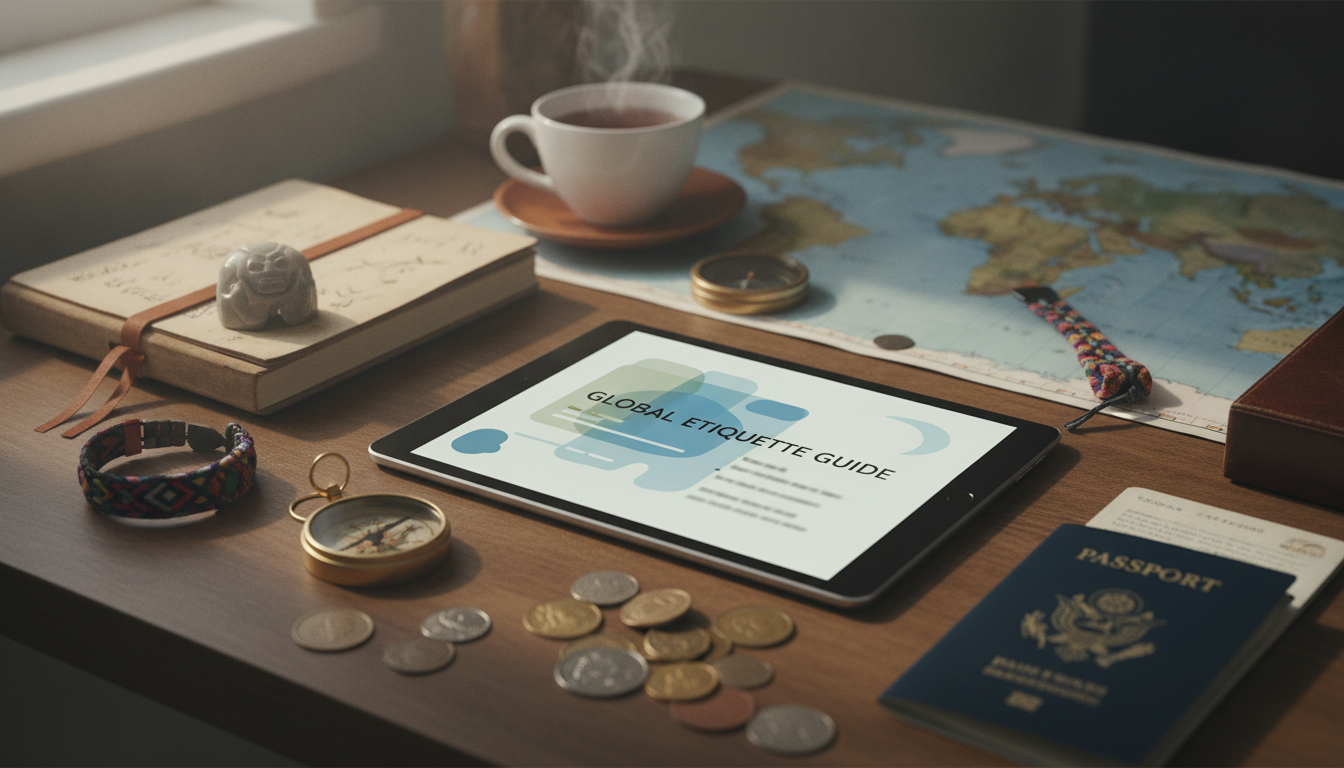
Travel Better Anywhere: Why Global Etiquette Matters
Good manners travel farther than any passport stamp. Whether a trip is for business, study, or pure fun, small choices—how you greet someone, what “on time” means, when to tip, how to dress, and how you speak to service staff—can shape safety, comfort, and relationships. The Smart Traveler’s Guide to Global Etiquette (digital download) is built as a fast-reference companion for real-life moments: arrivals, meals, markets, meetings, and respectful behavior in public and sacred spaces.
What This Digital Guide Helps With (and When It’s Most Useful)
- Pre-trip preparation: quick cultural do’s and don’ts to review before landing, including expectations in public spaces.
- On-the-go decisions: how to respond when customs differ from home (queues, personal space, formality, conversation topics).
- High-stakes moments: dining invitations, business meetings, religious sites, and situations where a small mistake can cause real offense.
- Communication support: practical strategies for respectful language, tone, and nonverbal behavior when a shared language is limited.
- Confidence without overthinking: simple rules of thumb that work across many regions when detailed local guidance isn’t available.
If you like tools that help you stay calm and adaptable while traveling, pairing etiquette basics with clear thinking can be helpful. The Critical Thinking & Problem Solving eBook (digital download) complements cultural prep by sharpening decision-making under pressure (delays, miscommunication, and unexpected rules).
Core Etiquette Principles That Translate Across Borders
- Assume context matters: the same gesture or phrase can be friendly in one place and rude in another; keep your behavior neutral and calm until norms are clear.
- Match the local level of formality: titles, surnames, and polite greetings reduce risk when meeting new people, elders, or officials.
- Watch the “tempo” of interaction: some cultures value quick efficiency, others value relationship-building and indirectness before making requests.
- Respect personal and sacred space: learn expectations for touch, photographing people, and entering religious or private areas.
- Let hosts lead: when invited into someone’s home or offered food, mirror what the host does for shoes, seating, and starting a meal.
Greetings, Body Language, and Conversation Boundaries
First impressions often come down to two things: the greeting and the tone. A “safe default” is a modest greeting, a mild smile, and waiting for cues from the other person. If they extend a hand, follow; if they bow or nod, mirror that instead. Keep your voice steady and avoid rushing into overly casual jokes until you understand what’s considered friendly versus disrespectful.
- Personal space varies: if distance feels tight, avoid stepping backward abruptly; angle your body slightly or shift your stance instead.
- Gestures aren’t universal: be careful with “OK” signs, thumbs-up, pointing, and beckoning; use open-hand gestures whenever possible.
- Conversation boundaries: politics, religion, income, family planning, and criticism of local customs can escalate quickly; start with neutral topics like food, landmarks, local arts, or sports.
- Photos and social media: ask before photographing people, ceremonies, or children; some sites restrict photos entirely and rules may be enforced.
Dining Etiquette and Tipping: Small Details That Matter
Meals are where “minor” etiquette differences can become big moments—especially when a host is trying to honor you. When unsure, follow the slowest, most formal diner at the table. If you need to decline food or alcohol, keep it brief and non-judgmental (allergy, medication, early schedule) rather than commenting on taste or custom.
Quick Etiquette Cheat Sheet by Situation
| Situation | Safe default | What to check locally |
|---|---|---|
| Meeting someone new | Use a polite greeting, mild smile, and wait for cues on handshake/touch | Formality level, eye contact norms, titles and surnames |
| Entering a home | Pause at the doorway and follow the host’s directions | Shoes off/on, gift-giving, where to sit |
| At a market | Be friendly and patient; ask before touching items | Bargaining norms, acceptable photo etiquette, cash handling customs |
| Dining out | Follow the host/server lead; keep voice moderate | Tipping, utensil/hand norms, whether substitutions are acceptable |
| Religious/cultural sites | Dress modestly and move quietly | Head coverings, photography rules, gender-separated areas |
Dress Codes, Public Behavior, and Respectful Presence
- Dress for the setting, not the forecast alone: modest clothing can matter more than comfort in certain neighborhoods, houses of worship, or rural areas.
- Volume and demeanor: loud conversation, public affection, or visible frustration can be judged more harshly where restraint is valued.
- Queueing and crowds: some places queue strictly; others use flexible lines—avoid confrontation and ask politely where to stand.
- Public cleanliness: littering, smoking zones, and eating on public transport can carry fines or strong social disapproval.
- Responsible tourism: choose consent-based interactions; avoid intrusive questions and uninvited photos, especially around rituals and local communities.
Local Laws, Safety, and Etiquette with Officials
For up-to-date requirements and advisories, use official sources such as U.S. Department of State — International Travel, UK Foreign, Commonwealth & Development Office — Foreign travel advice, and IATA — Travel Centre.
Practical Ways to Use the eBook Before and During a Trip
Ready to pack respect along with your charger and passport? Keep a copy of The Smart Traveler’s Guide to Global Etiquette (digital download) on your phone so you can double-check the basics before a meeting, a meal, or a day of exploring.
Who This Guide Fits Best
FAQ
What practical concerns should travelers consider when navigating new cultures such as etiquette, communication styles, and local laws?
Focus on greetings and formality, personal space and body language, dining and tipping norms, dress expectations (especially for religious sites), photo permissions, time/queue habits, and whether communication is typically direct or indirect. For laws, verify commonly surprising rules (medications, alcohol/vaping, drones, protests, restricted areas) using official travel advisories, and use observation and polite questions for etiquette.












Leave a comment